

Choosing a sofa: what really matters
A sofa is the most expensive and longest-lasting piece in most living rooms. And it is the one where the wrong criterion most often decides: the length, although the depth is more important.
Seat depth determines how you sit
With a seat depth of around 55 cm (21.7 in) you sit upright, feet on the floor, back against the backrest. From about 65 cm (25.6 in), upright sitting is hardly possible without the back losing contact with the backrest – such sofas are built for leaning back and lying down.
Both are legitimate, but they are different pieces of furniture. If you eat or work on the sofa, you need the shallower depth. If you want to lie down in the evening, the deeper one. Loose back cushions, incidentally, shift the usable depth forwards by a few centimetres, soft cushions more than firm ones.
If you are unsure, measure your current sofa and compare – that is more telling than any two-minute test sit.
Seat height shapes everyday use
Seat height is rarely considered when buying and yet is the first thing noticed in everyday life. Most sofas sit between about 40 and 45 cm (15.7 and 17.7 in) above the floor. Low seats look more relaxed and make the room appear higher, but make getting up more laborious. If you need to spare your knees or back, you are better off in the upper range.
A simple check: if your thighs are roughly horizontal when seated and your feet stand flat on the floor, the height is right. If your knees rise clearly above your hips, the sofa is built too low. The seat height should also suit the height of the coffee table, otherwise putting anything down becomes awkward.
Length follows the room, not your wishes
A sofa should be clearly shorter than the wall it stands against – as a guideline about two thirds. A sofa that almost fills a wall makes the room feel narrower, although it is only one piece.
The distances all round count just as much. Between the edge of the sofa and the coffee table, about 40–45 cm (15.7–17.7 in) is comfortable: close enough to put things down, far enough to walk past. For walkways in the room, at least 60 cm (23.6 in) should remain clear. In the end, a smaller sofa in a well-arranged room looks more generous than a large one that nobody can get past any more.
And delivery is part of the question of dimensions. Door widths, stairwells, turning points in the hallway and lift dimensions decide whether a piece arrives at all. It makes sense to measure the narrowest point of the route beforehand and compare it with the packaging dimensions, not with the dimensions of the finished sofa – the packaging is regularly several centimetres larger.
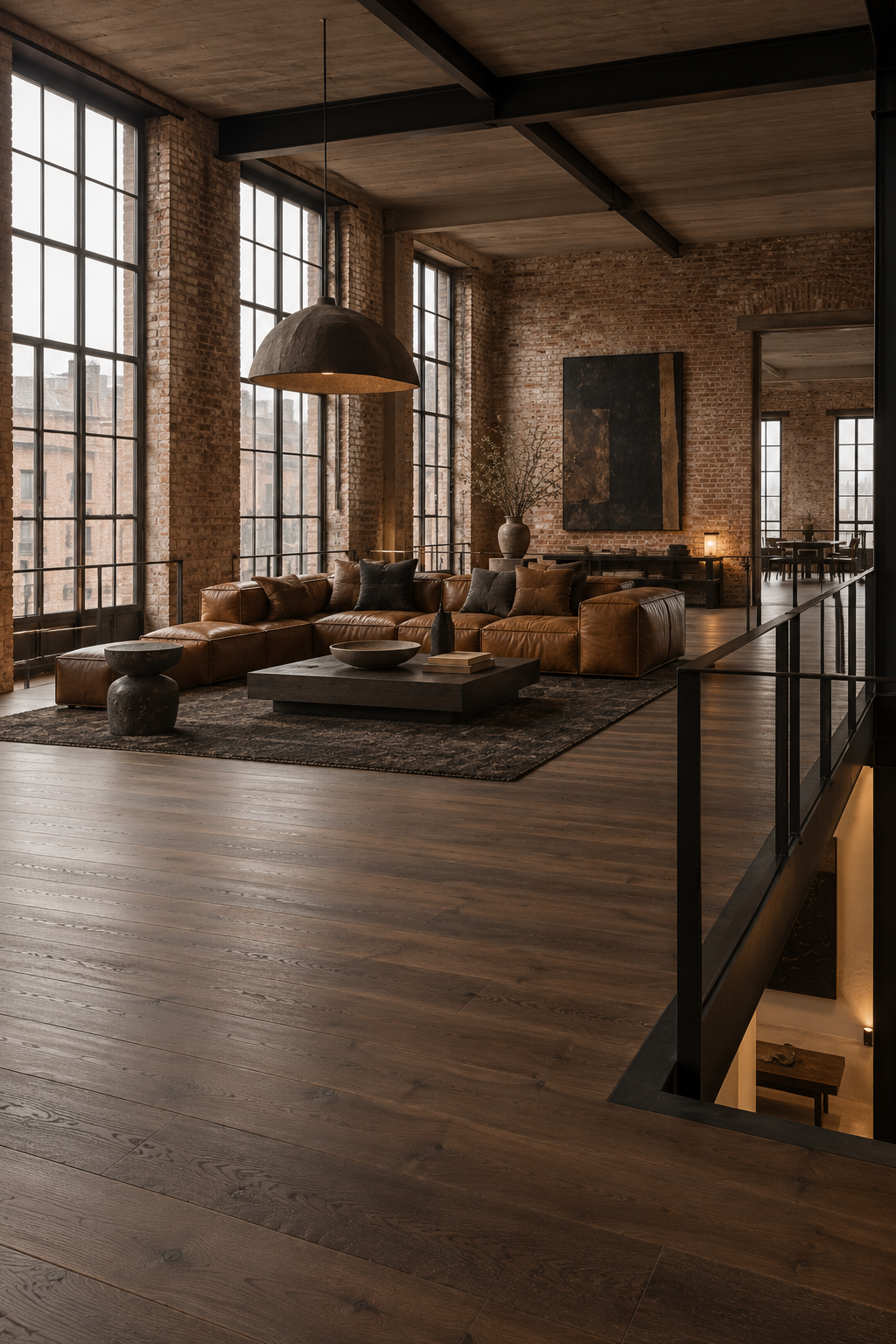
Modular sofas defuse the problem because they are delivered in separate parts and only assembled in the room. They have a second advantage: the arrangement can be changed later, and after a move a long row becomes a corner. On the other hand, joints between the modules remain visible, and the parts have to be pushed back together from time to time. Fixed sofas, by contrast, look calmer but set the form for their entire lifespan.
What determines the lifespan
Three things, in this order: the frame, the suspension, the upholstery.
A solid wood frame lasts for decades, a chipboard frame rarely more than ten years. Beneath it lies the suspension – steel springs or elastic webbing – which takes up the weight before it reaches the upholstery. If it is missing, the foam compacts more quickly and the sofa sags after just a few years.
For foam, density gives a first clue. As a guide: values from about 35 kilograms per cubic metre (2.2 lb per cubic foot), for cold-cure foam from 40 (2.5 lb per cubic foot), indicate upholstery that keeps its shape for years; well below that, the resilience usually fades sooner. This figure alone does not decide quality, however. Just as important are the compression hardness, that is, how firm the foam feels, the construction from several layers and the workmanship as a whole. A lighter foam in well-constructed upholstery can last longer than a heavy one in poor upholstery. Where the figure is missing altogether, the only option is to ask.
Spring core or foam is not a question of better or worse but one of how the seat feels. A spring core in the seat has a noticeable spring, stays evenly firm over the years and copes well with frequent use, but makes the sofa heavier and usually more expensive. Pure foam upholstery gives more softly and adapts more, but depending on quality loses height sooner. The most common is the combination: a spring core as the supporting layer, with foam or a fibre layer on top for seating comfort.
Fixed or loose cushions
Fixed back cushions keep their shape permanently and always look tidy. Loose cushions are more comfortable and can be turned, but need regular plumping – otherwise the sofa soon looks unkempt.
This is an honest question to ask yourself: if you do not plump cushions, choose fixed ones.
Something similar applies to seat cushions. A continuous seat shows fewer joints and does not slip; individual cushions can be turned and rotated, which spreads wear evenly and extends their service life. Cushions with a spring core keep their contour longest; down or fibre fillings are the softest to sit on but need plumping back into shape most often.
The cover
Removable covers are a clear advantage in everyday life and are regularly overlooked when buying: stains can be treated in a targeted way, individual parts can be replaced if necessary, and the sofa ages more evenly. A fixed cover is therefore not a reason to rule a sofa out. Sofas with fixed covers look smoother, because no zips or seam allowances are visible, and a good fixed cover lasts more years than a loose one that is washed often. If you choose removable covers, read the care instructions beforehand: not every cover belongs in the washing machine, and some fabrics shrink when washed.
When choosing fabric: the tighter the weave, the more hard-wearing. Coarse textures look warmer but snag more easily with pets. Leather is resistant to stains but needs to be kept away from direct sun and radiators, because otherwise it dries out and becomes brittle.
How much a fabric can take can be read from the rub count, measured in the Martindale test. Around 15,000 rubs are considered sufficient for normal living spaces; from about 30,000 a fabric is rated for heavy use, as found in households with children or animals. The value, however, only describes abrasion. Whether a fabric pills, how lightfast it remains and how sensitive it is to stains are covered by other specifications – and for everyday life these are often the more important ones.
Frequently asked questions
Which seat depth is right?
Around 55 cm (21.7 in) for upright sitting, from about 65 cm (25.6 in) for relaxed leaning back and lying down. The depth determines the use more than the length does.
How long should a sofa be?
As a guideline, about two thirds of the wall it stands against. A sofa that fills the wall makes the room feel narrower.
How can you recognise a long-lasting sofa?
By a solid wood frame, the presence of suspension and cleanly built upholstery. A foam density from about 35 kilograms per cubic metre (2.2 lb per cubic foot), for cold-cure foam from 40 (2.5 lb per cubic foot), is a good clue, but not the only criterion.
Fixed or loose back cushions?
Fixed ones keep their shape without care; loose ones are more comfortable but need regular plumping.
What if the sofa does not fit through the door?
Choose a modular sofa. It is delivered in separate parts and only assembled in the room. Beforehand, it helps to compare the narrowest point of the delivery route with the packaging dimensions.


