

Pairing Cognac Leather: Colours That Work with It
Cognac leather is not a single colour but a range – from light caramel to deep reddish-brown. What all variants have in common is a warm, yellow-red undertone. Cognac therefore draws attention to itself and becomes the dominant colour in most rooms. Everything that stands next to it should be correspondingly calm.
What works reliably
Off-white and natural linen white. The simplest way. Light textiles next to cognac give the leather space and let the colour glow, without a second colour competing for attention.
Muted green. Sage, olive, forest green. Green lies opposite the red in cognac on the colour wheel and so creates tension, but in a muted form remains calm enough for a living space. This is one of the most reliable combinations with cognac.
Anthracite and warm black. A dark counterpoint gives the leather definition. What matters is a black with a brown or green undertone rather than pure blue-black.
Sand, taupe, greige. Earth tones midway between light and dark. They absorb attention instead of competing, and work well as a rug or a large area of curtain.
Brass and bronze. Warm metals pick up the gold in the leather. Chrome and polished stainless steel look cool and out of place next to it. Anyone who has both in the room should limit the cool metals to small items.
What does not work
Orange and rust red. Too close. Instead of contrast, you get a blur, and both colours lose out.
Cold grey and blue-grey. The most common mistake, because grey is considered safe. Next to cognac, cold grey looks dull, and the leather appears to shift towards orange.
Strong navy blue over a large area. Interesting as a small accent; as a wall colour it becomes a contest: two saturated colours that both want to dominate the room.
Several browns side by side. Cognac-coloured sofa, brown rug, brown curtains – without a difference in brightness, this becomes a surface without structure. Brown needs a light contrast to look high-quality.
Which wood goes with it
Light oak is the safest partner, because the difference in brightness is large enough. Walnut works too, but needs a light surface in between – otherwise wood and leather blur into one mass.
What matters here is less the wood tone than the area it takes up. A warm wood hardly clashes with cognac as long as it appears as a narrow line: as a frame, as an armrest, as a table edge. Two warm tones work well together if one of them is only an outline. As soon as the same wood appears over a large area – as a floor, as a cabinet front – the two add up to a single brown mass, and the room loses depth.
Reddish woods such as cherry or mahogany are tricky, because they intensify the red in the leather. And matt, oiled surfaces harmonise better with leather than high-gloss lacquer, because leather itself has a matt to silky sheen and high-gloss lacquer looks harsher next to it.
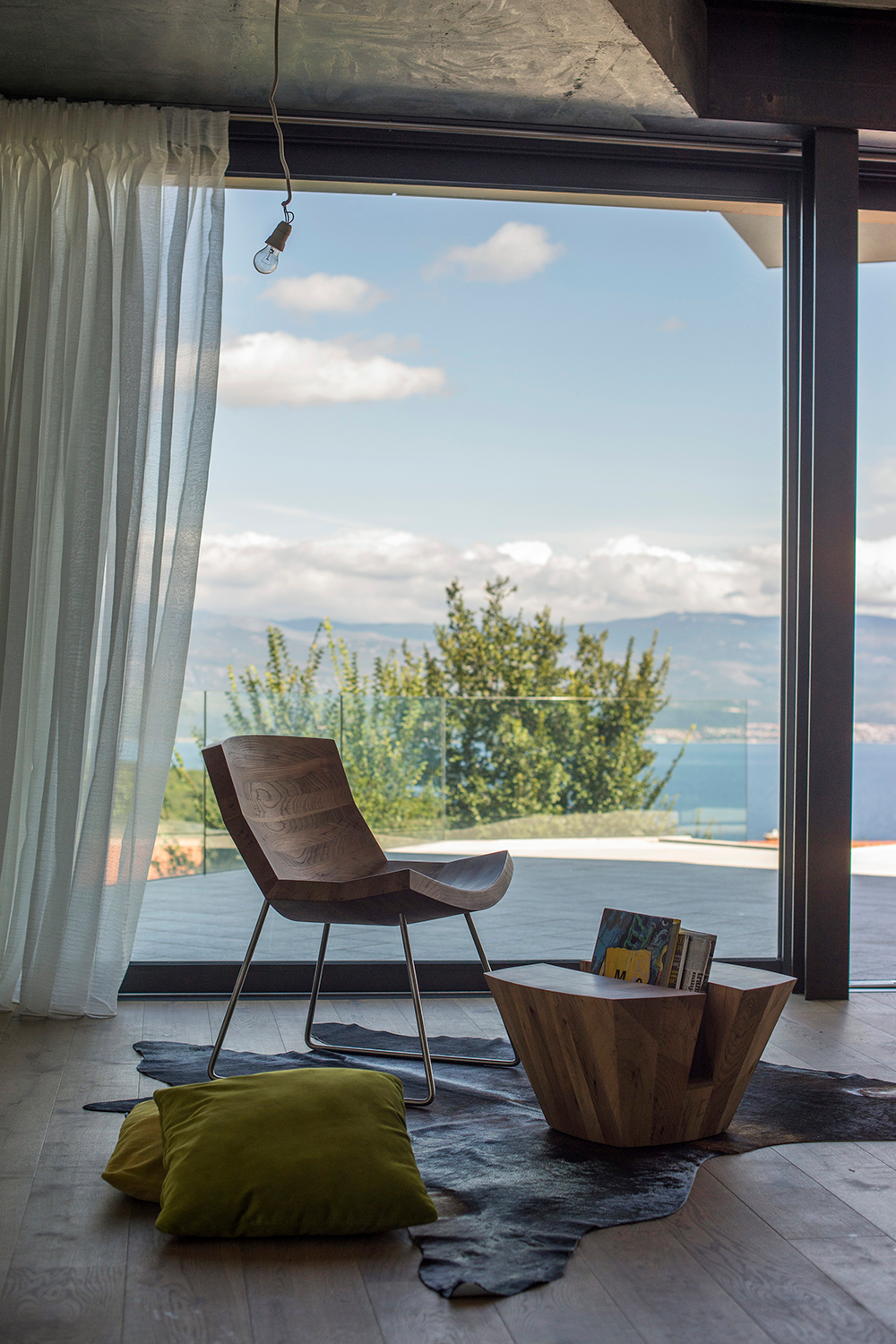
Cognac does not stay cognac
Aniline and semi-aniline leathers are only lightly pigmented or not pigmented at all, and therefore change under light. A seat that looks light caramel today can look considerably deeper after a few years – especially in the places that catch the sun. Heavily pigmented leathers with a closed top coat are more colour-stable, but in return also develop less patina.
Two things follow from this. Firstly: anyone who matches the wall colour exactly to today's leather tone is matching it to a state that will pass. A somewhat more neutral wall tone survives the change. Secondly: a leather piece should not stand half in the sun and half in the shade, otherwise a visible difference in brightness develops on one and the same piece.
Everyday care
Direct sunlight and constant moisture are the two factors that change leather fastest. Dry air from a radiator directly next to the piece does not do it any good either.
Day to day, regular dry dusting is enough – dust collects in the pores and over time acts there like a fine abrasive. Leather care products should be used sparingly: too much clogs the pores and leaves a greasy film. Harsh cleaners, solvents and wet rather than only slightly damp cloths have no place on leather. The lighter and more open-pored a leather is, the more sensitively it reacts to stains, and the more worthwhile it is to test a new care product first on a hidden spot.
A set-up that works
Wall in warm off-white. Floor in light oak. A seat in cognac as the focal point of colour. Rug in sand or greige. A green accent – a plant is enough. A detail in brass. Nothing else colourful.
Cognac is strong enough to carry a room on its own. The mistake is almost never too little colour around it, but too much.
Frequently asked questions
Which wall colour goes with cognac leather?
Warm off-white, sand, greige or muted green. Cold grey and tones with a bluish cast make the leather look orange.
Does grey go with cognac?
Only warm grey such as greige or taupe. Cold blue-grey looks dull next to it.
Which wood goes with cognac leather?
Light oak is the safest. Walnut works if there is a light surface in between or if the wood appears only as a narrow outline. Reddish woods such as cherry are tricky.
Does cognac leather darken?
Yes. Aniline and semi-aniline leathers change under light and become deeper over the years. Direct sun on only one side creates visible differences.
How do you care for cognac leather?
Dust regularly with a dry cloth and, when needed, use a suitable leather care product sparingly. No harsh cleaners, no constant moisture, no direct sunlight.


