

Creating a reading nook
A reading nook needs little space and is nevertheless rarely used. Usually it is not the armchair that is missing, but one of three things: the right light, a surface within reach or cover at the back.
Seating geometry is decisive
Reading needs a different sitting position from watching television. When you read, you sit more upright and hold your head more still. The seat depth is right when your back rests against the backrest while your feet stand flat on the floor. If the seat is deeper, the body slides forward and the backrest no longer supports it.
The backrest should reach at least to the shoulder blades. If it reaches up to the neck, it gives additional relief as soon as you lean back. A rather upright backrest, only slightly reclined, keeps your gaze on the book without the head tipping forward.
A very deep lounge chair, on the other hand, only works with your legs drawn up or a stool in front of it. A footstool is not an accessory here, but compensates for the seat depth: if the feet are higher, the pelvis tilts backwards and the back comes back against the backrest. Anyone who wants neither ends up sitting crookedly after ten minutes.
Armrests are more important than usual when reading, because the arms hold the book. The height is right when the shoulders stay relaxed – armrests that are too low let the arms hang, ones that are too high push the shoulders up. Without any support for the arms, holding the book becomes tiring considerably faster.
Light from the side or from diagonally behind
The most common misplacement is a lamp in front of the armchair. From the front, the light falls into the eyes, dazzles and lowers the contrast on the page.
Ideally, the light comes from the side or from diagonally behind, over the shoulder onto the book. Directly from above is also unfavourable, because the head and upper body then cast a shadow on the page. Which side is better depends above all on where in the room there is space for a lamp and where there is a socket.
Height counts just as much: when you are seated, the point where the light emerges should be above the line of sight and shielded, so that neither the bulb itself nor a bright reflection falls into the eye. A shade or a directional lamp concentrates the light on the page instead of brightening the whole room.
Warm white light of about 2700 to 3000 kelvin is perceived as pleasant in the evening. More important than the light colour, however, is that enough light reaches the page and that it is directed.
Some background light in the room also helps. A single bright lamp in an otherwise dark room creates a strong contrast between light and dark, to which the eyes have to readjust every time they look away from the book. A dimmer makes it easier to adjust the reading light to the time of day.
A surface within reach
Without a surface for a cup, glasses and book, a reading spot will not be used – this is the most frequently overlooked point.
A small side table is enough; what matters is the height: about at the height of the armrest or just below, so that you can reach it without getting up. If the surface stands to the side of the armchair rather than in front of it, it is easier to reach when seated and does not block the way.
A small bowl on it catches glasses and bookmarks. If you keep the next books right next to it – on a low shelf, in a basket or in a pile on the floor – you save yourself the walk to the bookcase.
Cover at the back and a defined space
People avoid seats in the middle of the room. A reading nook works better when there is something behind the armchair – a wall, a shelf, a plant. It is also pleasant when the view goes into the room or towards the door and not away from what is going on.
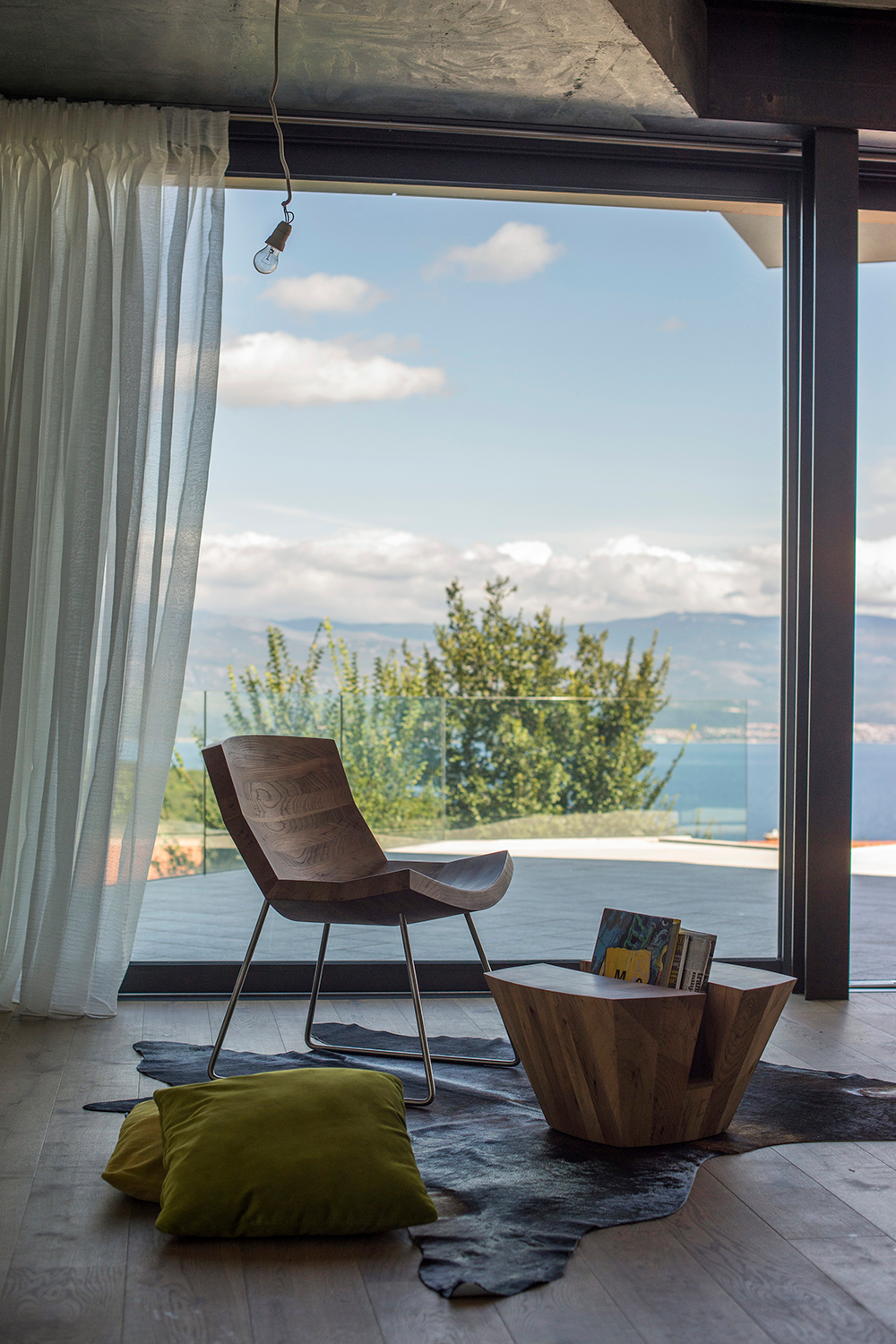
A small rug under the armchair and table turns two pieces of furniture into a zone. That is the difference between an armchair that stands somewhere and a place in the room.
Just as important is that the armchair, surface and lamp stand together as a group and are not spread around the room. A curtain, an open shelf or the back of a sofa can additionally define the nook without closing it off.
Where a reading nook fits
Corners that would otherwise remain unused are ideal: next to a window, in a bay, at the end of a room, in the bedroom instead of a bench at the foot of the bed. The only important thing is that the place does not lie in a thoroughfare – where someone is constantly walking past, nobody can settle.
Daylight is a bonus, but not a must – reading usually happens in the evening. A place next to the window without artificial lighting works less well than a dark corner with a good lamp.
If the armchair stands by the window, the daylight should come in from the side. If you sit facing the bright window directly, it dazzles just as much as a lamp in the same place.
Frequently asked questions
Which armchair is suitable for reading?
One in which your back rests against the backrest while your feet stand flat on the floor. In addition, a rather upright backrest reaching at least to the shoulder blades, and armrests as support. Very deep lounge chairs need a stool.
Where is the right place for the light when reading?
To the side of or diagonally behind the armchair, so that it falls over the shoulder onto the book. From the front it dazzles; directly from above, your own upper body casts a shadow on the page.
What does a reading nook need at a minimum?
A suitable armchair, directed light and a surface within reach. Without a surface, the place is hardly used.
How do you define a reading nook?
Through cover at the back from a wall, shelf or plant, a small rug under the armchair and table, and by having the seat, surface and lamp stand close together.
Does a reading nook have to be by the window?
No. Reading usually happens in the evening, so good artificial light is more important than daylight.


